Why Your HVAC Refrigerant Lines Need Proper Insulation
Damaged insulation on your HVAC refrigerant lines can quietly cost you comfort and efficiency. Learn why it matters and what to do when it’s falling apart.
When a “Little” Insulation Problem Isn’t So Little
We recently got a call from a customer — let’s call him Mark — who said, “I need an HVAC line to have the insulation fixed on it. I’ve got some issues with it.”
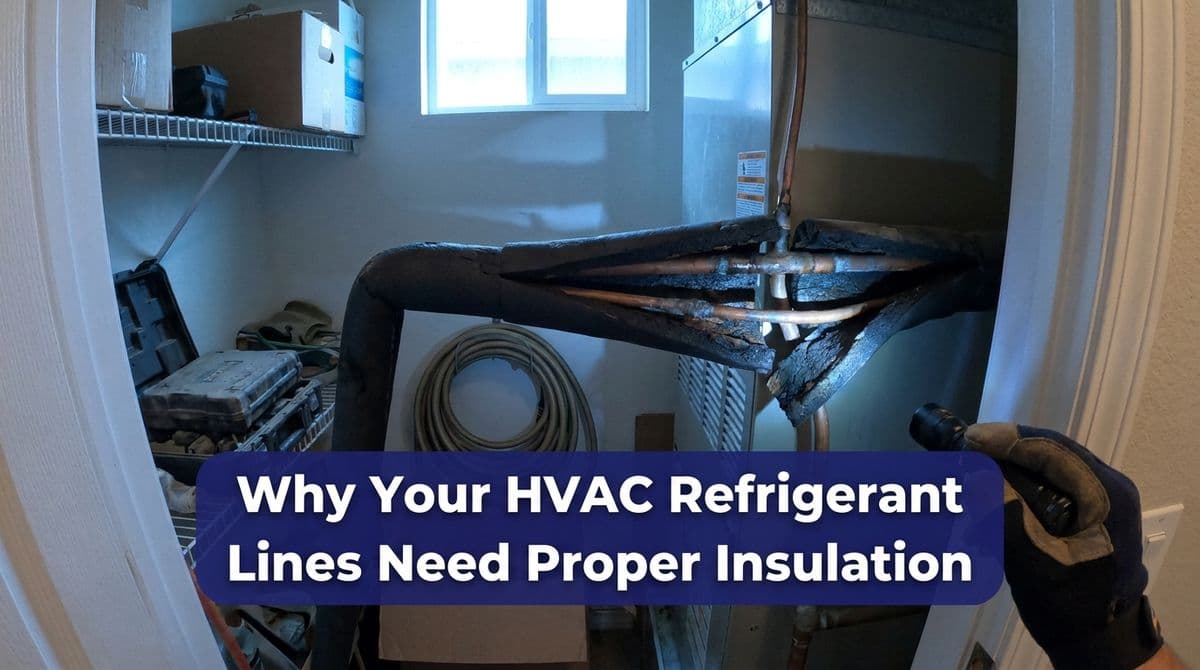
When we arrived, we found exactly what he was talking about: the black insulation around the copper refrigerant line outside had split and crumbled in places. It didn’t seem like a huge deal at first glance — just some worn foam, right?
But as we explained to Mark, that “foam” plays a big role in how well your air conditioner or heat pump works. Damaged refrigerant line insulation can quietly cost you comfort, efficiency, and even shorten the life of your system if it’s ignored for too long.
What Those Copper Lines Actually Do
Most homeowners know they have copper lines running between the outdoor condenser and the indoor unit, but it’s not always clear what they’re for. When Mark asked about “the coil on it,” he was really talking about the refrigerant lines — usually a small bare copper line and a larger one wrapped in insulation.
Here’s the simple breakdown:
- Suction line (bigger pipe, usually insulated): Carries cool refrigerant gas back to the outdoor unit, picking up heat from inside your home.
- Liquid line (smaller bare pipe): Carries warm, high-pressure liquid refrigerant into the indoor coil to absorb heat from your air.
The insulation you see outside is there to protect that larger suction line. When that insulation is missing or damaged, the line can’t do its job as efficiently.
Why Proper Refrigerant Line Insulation Matters
When we walked Mark through what was happening, we broke it down into everyday terms. Think of that larger copper line like an ice-cold drink on a hot day. If you leave the glass exposed, moisture forms on the outside and the drink warms up faster. Wrap a koozie around it, and it stays colder longer.
That’s basically what insulation is doing for your refrigerant line. When it’s in good shape, it helps:
- Maintain efficiency: The refrigerant stays cold as it travels, so your system doesn’t have to work as hard to remove heat from your home.
- Prevent energy loss: Less cooling is wasted to the hot outside air, which can help lower your electric bills.
- Protect the line: Insulation shields copper from UV damage and reduces sweating that can drip where you don’t want water.
- Keep temperatures in the right range: Proper refrigerant temperature is important for your compressor’s health and overall system performance.
What Happens When Insulation Is Damaged
Over time, sun, weather, and lawn equipment all take a toll on that foam. In Mark’s case, the insulation had:
- Split open along the top
- Dry-rotted from years of sun exposure
- Fallen off in a couple of spots right where the line bent
When we see that kind of damage, we look for a few common problems:
- Higher energy bills: Your system runs longer to achieve the same temperature because it’s losing cooling along that exposed line.
- Uneven cooling: Rooms may not feel as cool, especially on really hot days, because the system is struggling to keep up.
- Condensation where you don’t want it: Bare copper can sweat and drip onto siding, walkways, or other materials.
- Extra strain on the system: When refrigerant temperatures aren’t where they should be, your compressor has to work harder.
One important point we shared with Mark: damaged insulation doesn’t automatically mean your refrigerant charge is low, but it can definitely contribute to poor performance that feels like a low-refrigerant issue.
Can Homeowners Replace Line Insulation Themselves?
Mark’s next question was the one we hear a lot: “Is this something I can just fix myself?” The honest answer is: sometimes, yes — with limits.
If the copper line itself isn’t damaged or kinked and it’s only the insulation that’s worn, a homeowner who’s comfortable with DIY projects can often handle a basic replacement. Here’s what that typically involves:
- Buying the correct size and type of refrigerant line insulation (Armaflex or similar)
- Cutting it to length and slipping it over the suction line
- Sealing the seams and joints with UV-resistant tape or adhesive
- Securing bends and fittings so the insulation doesn’t gap or slide
However, we always caution homeowners: if you see oil stains, severe corrosion, kinks, or you’re not sure which line is which, that’s a sign you should bring in a professional. You never want to cut, bend, or put stress on the copper itself — that’s the highway your refrigerant travels on.
What We Do During a Professional Insulation Repair
With Mark’s system, we did more than just slap on new foam and call it a day. A proper repair usually looks like this:
- Inspect the entire line set: We look from the outdoor unit all the way to where the line disappears into the wall to check for damage, rubbing, or potential leaks.
- Remove all failing insulation: Old, split, or sun-baked foam is taken off so the new material sits correctly.
- Measure and install new insulation: We use the right wall thickness and diameter for that specific line, not a “one size fits all” piece.
- Seal and secure every joint: Seams, elbows, and transitions are taped or glued so there aren’t gaps where heat can get in.
- Check system operation: Once we’re done, we verify that pressures, temperatures, and performance are where they should be.
This way, you’re not just getting a cosmetic fix; you’re getting your system back to the efficiency level it was designed for — or as close as possible for its age.
How to Keep Your Refrigerant Line Insulation in Good Shape
Before we left, we shared a few tips with Mark that apply to almost every homeowner:
- Look over your lines once or twice a year, especially before and after cooling season.
- Keep weed trimmers and lawn equipment away from the line set to avoid nicks and cuts.
- Watch for cracking, splitting, or bare spots in the insulation and address them early.
- Ask for a quick line inspection during your regular HVAC maintenance visit.
Refrigerant line insulation isn’t the flashiest part of your HVAC system, but it quietly affects your comfort and your energy bills every single day. If you’ve noticed bare copper or crumbling insulation around your lines, it’s worth having a professional take a look and get it corrected the right way.
If you’re unsure whether what you’re seeing is normal wear or a problem, we’re always happy to come out, inspect the system, and walk you through your options in plain language — just like we did for Mark.